Give your code a home
Deploy services for incoming requests and tasks for work with a beginning and an end.
Deploy the code, give it memory, and keep the work in view. Aetherfy brings the infrastructure around your agents into one platform.
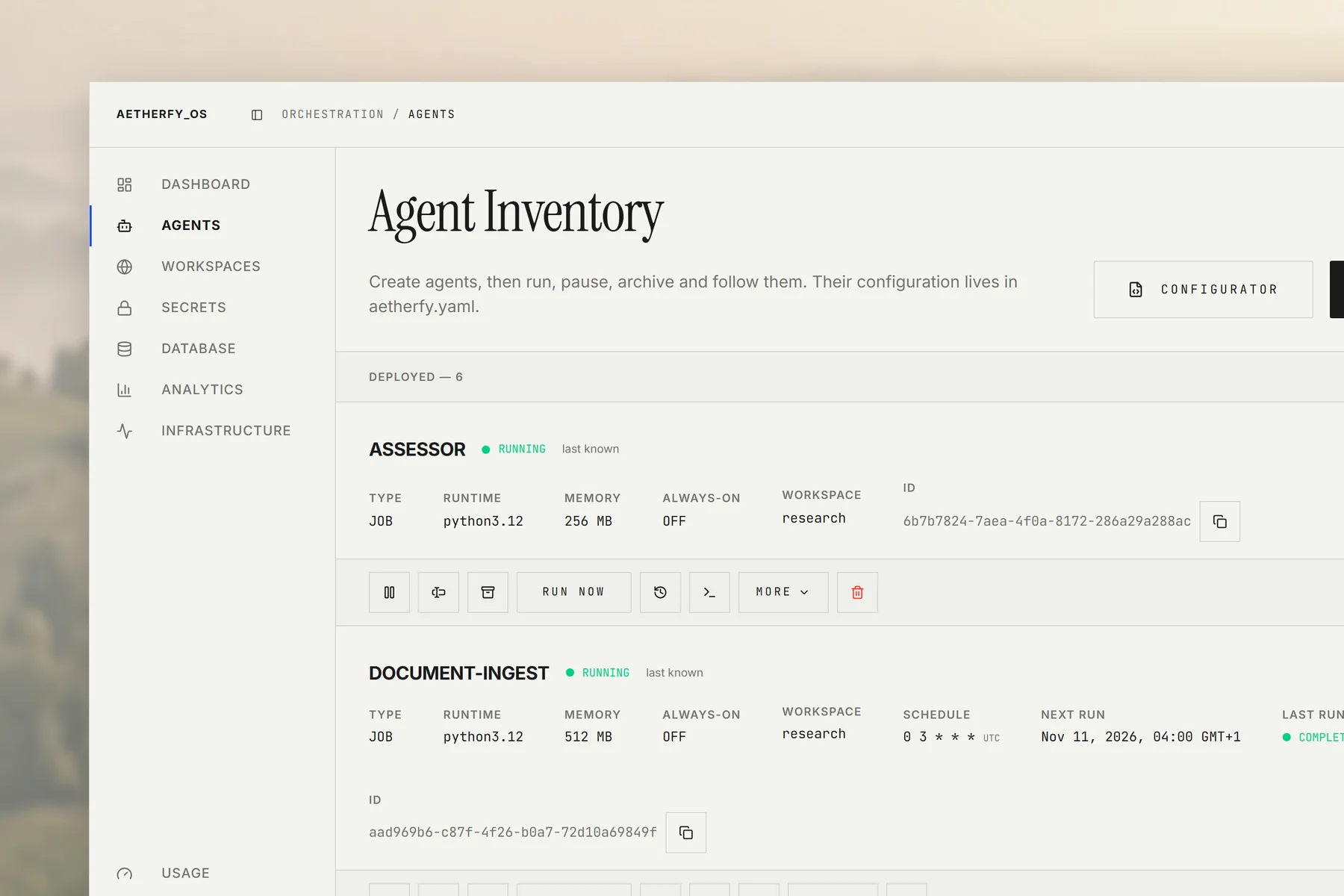
How it fits together
Deploy services for incoming requests and tasks for work with a beginning and an end.
Store vectors and metadata beside the agents that read and write them.
Follow deployments and runs, control access, and manage resources from your dashboard or terminal.
Code to cloud
Bring Python, Node, TypeScript, Bun, or a custom Dockerfile. A manifest describes how your agent runs; the platform builds and deploys it.
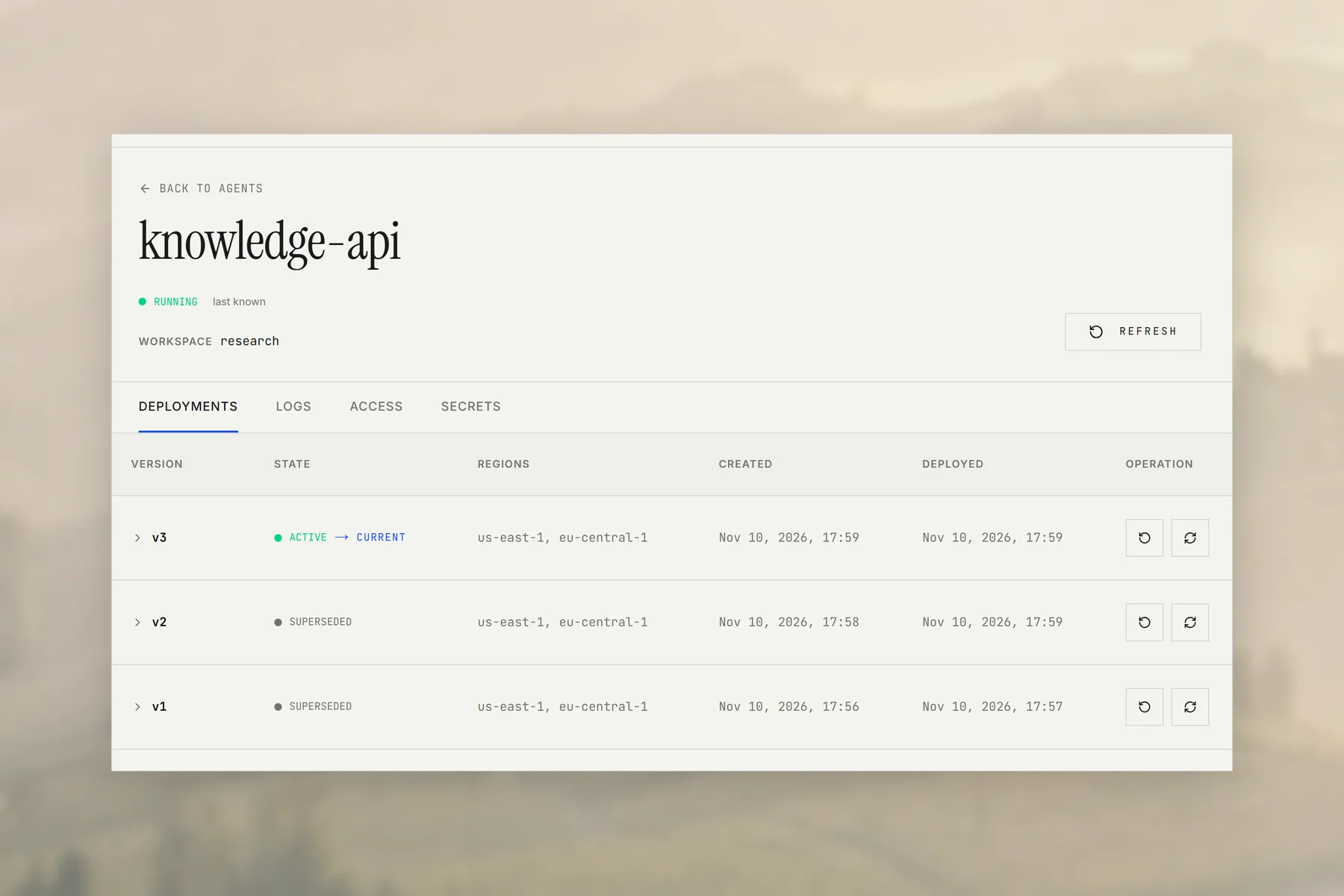
Use a service for an API or webhook. Use a task for ingestion, research, and scheduled work. Outside systems call a service; a task is started by you, a schedule, or another agent. Connect a GitHub repository when a branch should become your deployment path.
A shared context
Agents and collections share your workspace’s regions, and a deployed agent reaches the vector API in its own region, so retrieval stays close to the code using it. Store document chunks, conversation context, and application knowledge using SDKs or the vector API.
Agents can create and populate collections within their access levels. Give full access when cleanup is part of the work, and protect the collections they must not remove.
Explore vector memory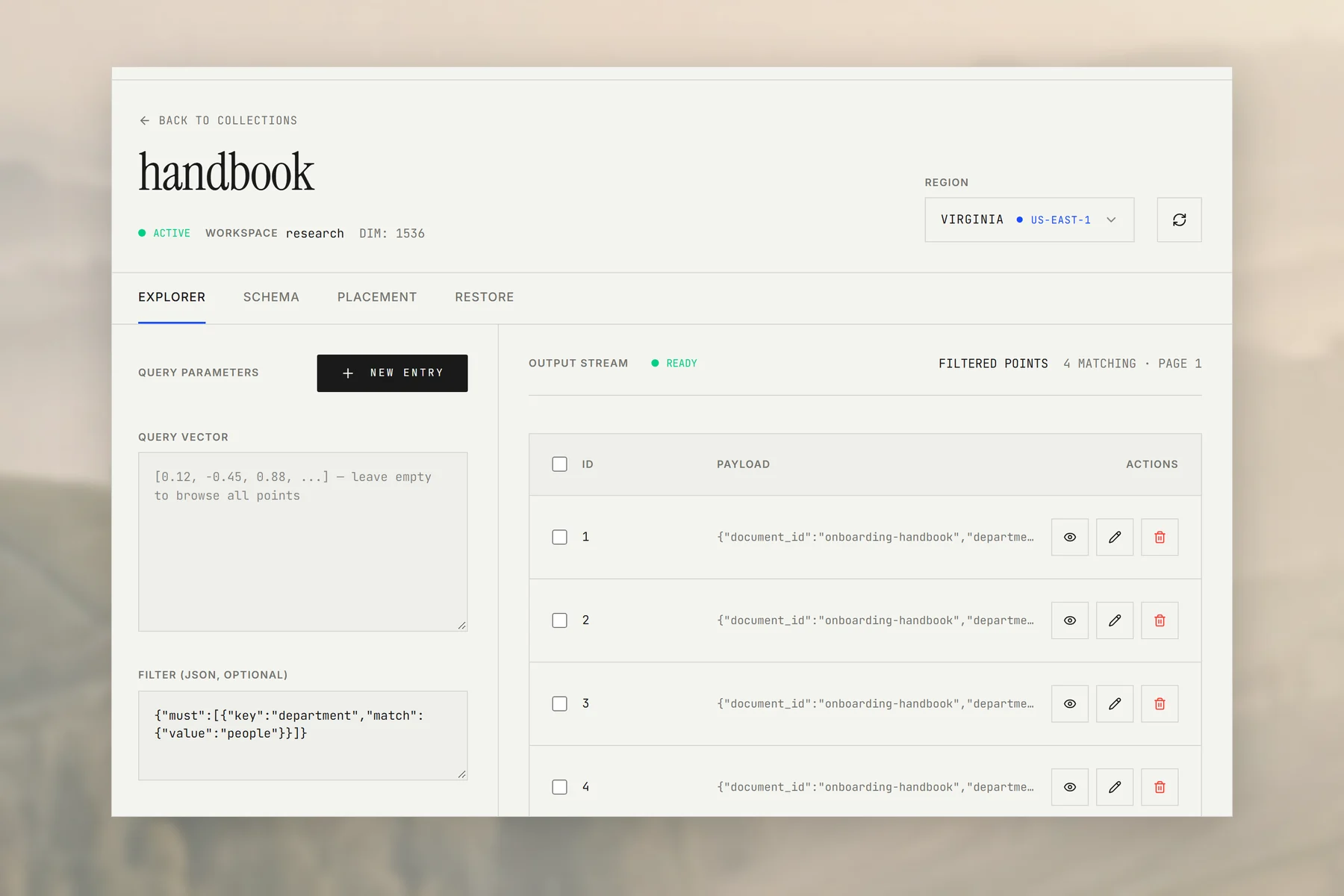
Work across agents
Let a coordinator delegate work to other deployed agents. Pass inputs, wait for outcomes, and combine the results in your own application logic.
Workspaces group agents, collections, and secrets. Access levels decide which collections an agent can reach and which operations it may perform.
Explore agent orchestrationruntime: python3.12type: jobentrypoint: main.pyspawn: enabled: true workers: - research-worker - assessorA concrete starting point
Create or link an agent with afy init, then deploy from its directory. Add memory and other workers when your application needs them.
Continue in the documentationafy initafy deployafy list --jsonA clear division of work
Before you build
Yes. Compute, memory, workspaces, access, and usage are managed as parts of Aetherfy through one account and dashboard. You can adopt the capabilities your application needs without assembling separate Aetherfy products.
Workspace regions bound where resources can live. Free and Starter run in one region. Performance and above add multi-region deployment and vector replication; regional usage and changes remain subject to plan limits.
A coding assistant can read the current docs through the public docs MCP server and use your authenticated CLI or APIs to operate Aetherfy. The docs server itself is read-only.
One platform for the work ahead